Social Training Wheels

Hand holding a Social Media 3d Sphere

Should teachers and students be Facebook friends?  Is it ok for a student and teachers to Tweet with each other?  I have been involved in these discussions so many times and I see valid points in both sides of the argument.

On one hand….
Has there ever been a case of inappropriate relationships between teachers and students that couldn’t be traced back to a social media connection?  There’s a lot of bad stuff out there and such tools are a distraction from learning at the least and a potential for real harm at worst.  How would you monitor and control it?  You can’t.  You can only teach students what is right and the respond when they choose to do otherwise.  There are other tools, such as MBC, that offer the same social components but provide the safety net that can protect students while also teaching them to behave appropriately.
On the other hand…. 
Facebook and Twitter connected us with a far bigger world – a world that has huge learning potential!  Students and teachers can use these tools to connect with people in fields of study, experts, and gain cross-cultural experiences.  They are tools so many are already using and checking daily.  Are we going to throw those opportunities away because we’re too scared of what might happen?
As you can see, I’m a bit torn on this.  I see so much good for education in these tools, but I’ve seen too many hurtful posts, indecent pictures and inappropriate student/teacher relationships to just jump in and embrace it.  People who are opposed to filtering and blocking content at schools always argue that students need to learn through experience.  I agree, but I also don’t think they have to learn the hard way through a negative experience.  I think we should be more proactive than that.  Perhaps my views are affected by being a parent.  I have the responsibility to teach my children right from wrong and I think it is possible to overprotect them in a way that hurts them more than helps them.  But I still protect them.  When they were learning to walk I didn’t just sit there and watch them hurt themselves over and over.  I held their hands for a while.  I guided them away from sharp corners and covered the outlets.  Over time, I held their hand less and gradually allowed them to try on their own.  Yes, I knew they would still take some falls when I let go, but I waited until I knew the pain would be minimal.  It is the same with learning to ride a bike.  We start with training wheels.  At some point, they have to come off, but we don’t just put our kid on an adult bike and send them down a hill.
So for now, I have adopted these positions:
  • I use Facebook for personal connections only, and do not accept friend requests from students until after they graduate.
  • I use Twitter professionally.  I haven’t actually received any student followers (I don’t think) because they don’t care about the professional stuff I post on Twitter, but I do not restrict my tweets.  It has played a HUGE role in developing in my Professional Learning Network and I have grown in immense ways through the people I connect with there.
  • I promote and support My Big Campus fully (hence the little “MBC Coach” badge next to my name).  I think it is kind of like giving students a social platform with training wheels.  It allows them to learn, teaches them how to do better when they do make errors of judgement, but does it in a safe environment where they are protected from real harm.
So when is the right time to take the training wheels off?  I think it probably is before they leave k-12 education, but only after we’ve given them sufficient practice in a safe environment.  Maybe another year or two into our 1:1 and we’ll be able to do this with our older kids.  But there have been enough of these issues in the last few months with these tools restricted that I can’t say we’re there yet.  The students need to show they are mature and responsible enough to handle it, and it’s our responsibility to get them to that point.
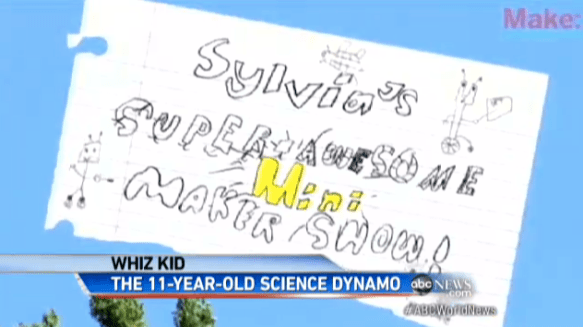
Move Over Bill Nye

I first saw this a few weeks ago and I just can’t stop thinking about it.  This is why I’m doing what I’m doing.  I wrote previously about how technology is tearing down walls that have prevented students from reaching their full potential.  Perhaps this story intrigues me so much because I’m a science teacher and a Digital Curriculum Integration Specialist, and it is the culmination of those two worlds – but I just think it’s an amazing depiction of what we can do in 21st century education.  I know some will watch this and immediately say that this little girl is accomplishing this because she has a dad that’s supporting her and providing opportunities. We can say that our students don’t have involved parents like that, but what if they got these opportunities in the classroom?  What could our kids do if we just gave them the freedom and the chance to try?  There are a lot of people who shake their heads at such idealism, but I say… let’s find out.  That’s how all great things have come into being.

Screen Shot 2013-05-10 at 8.49.37 AM

Tearing Down Walls

Aside

ImageIf someone were to ask me what I am so passionate about online and blended learning, I’d have to say that it is because it tears down walls.  When we choose the right tools and use them in the right way, technology gives us an opportunity for competency-based learning that was never possible before.  It allows us to give every student exactly what he/she needs.  In a traditional classroom, differentiation… true differentiation… is difficult at best.  But there are so many resources available today that make this perfect-world type of teaching a real possibility.   Blended learning can remove the barrier of limitation placed on advanced students who are ready to move on, the barrier of frustration when struggling students are given work they aren’t really ready for, the barrier of students falling farther and farther behind because the test is over and lessons move on but they never really got it.  Before these tools, teachers tried to give each student the content they needed, but it has always resulted in students being labeled and grouped.  No matter how cleverly veiled, students can see through the cute names and know where they fit in the hierarchy of “intelligence”.  If we do blended learning right, these days are behind us.  Every child’s learning path, pace and method personalized just for them.  It’s not impossible anymore.

As SWP began our digital journey, we found a need to define “digital curriculum” to the staff, parents and community.  You’ll find books, articles and blog posts in abundance on this term, but very few true definitions.  So we wrote our own.  We define digital curriculum as “content, learning exercise and assessments that involve digital components which transform learning from static memorization of material to dynamic interaction with concepts, critical thinking and application.  Digital curriculum provides differentiated learning, always current content and relevance for students who have ownership of their education.” (http://mrsporter.com/about/)  Do you hear the bricks of the wall hitting the ground as you read that?  Learning is no longer just a lot of stuff to cram in your head.   Student’s are active participants, not robots, and what they’re doing with their learning matters now and in the future.

I could probably write book on this idea of how using technology in education tears down the walls. Maybe I will someday.  But for now, just one more comment.  When we use a course management system, social media or other tool and encourage both private and public conversation between teachers and students, we bring down many barriers for today’s digital generation.  Here’s a personal story to illustrate.  For years I had posted my course content to a website for students to be able to access materials they needed.  One year, I got ambitious (read as bored with my website) and decided to redesign it using a Wiki one summer.  Later, I transitioned to using My Big Campus.  Both methods allowed students to contact me anytime.  I taught both 7th and 8th grade in a small school.  So I had every student for two consecutive years.  Jacob (name changed) was an 8th grader when I made this change.  His entire 7th grade year I think he and I may have exchanged less than a dozen words.  He was quiet and unengaged – the kind of student who can so easily slip through the cracks.  As I started using a platform to manage my course that allowed for interaction, he started interacting.  He sent me messages frequently – questions about the day’s lesson, comments about what he liked and even volunteered to participate in things.  For Eric, verbally speaking these things in class was just too far out of his comfort zone, but through his computer he came alive.  His grade climbed dramatically. Enough that his parents wanted to know what was going on.  There was just one answer:  technology allowed the wall to come down and opened a whole new world in his learning.